

Tooth damage rarely improves on its own, and dental professionals carefully evaluate whether a filling or crown will best restore a tooth’s strength. Minor cavities often respond well to fillings, yet larger structural problems demand more protection. Dentists frequently recommend a crown instead of a filling when a tooth becomes fragile, cracked, or heavily decayed. The Dental Krewe explains the reasoning clearly: “When a tooth has lost too much natural structure, a crown protects what remains and helps patients keep their natural tooth functioning for many years.”
When a Crown Becomes the Better Option Than a Filling
Dental decisions usually come down to stability and long-term protection. Imagine a patient with a cavity that has slowly expanded beneath the enamel; the patient expects a small filling, yet examination shows that much of the tooth structure has weakened, leaving the tooth vulnerable during chewing. Situations like this appear frequently in dental practices and they highlight why crowns exist, they protect what remains. Dentists study decay depth, enamel thickness, and bite pressure before recommending the final treatment.
- Large cavities reduce tooth strength dramatically.
- Teeth exposed to heavy chewing pressure require stronger restoration.
- Dental imaging helps identify hidden structural damage.
1. Extensive Tooth Decay Weakens Enamel
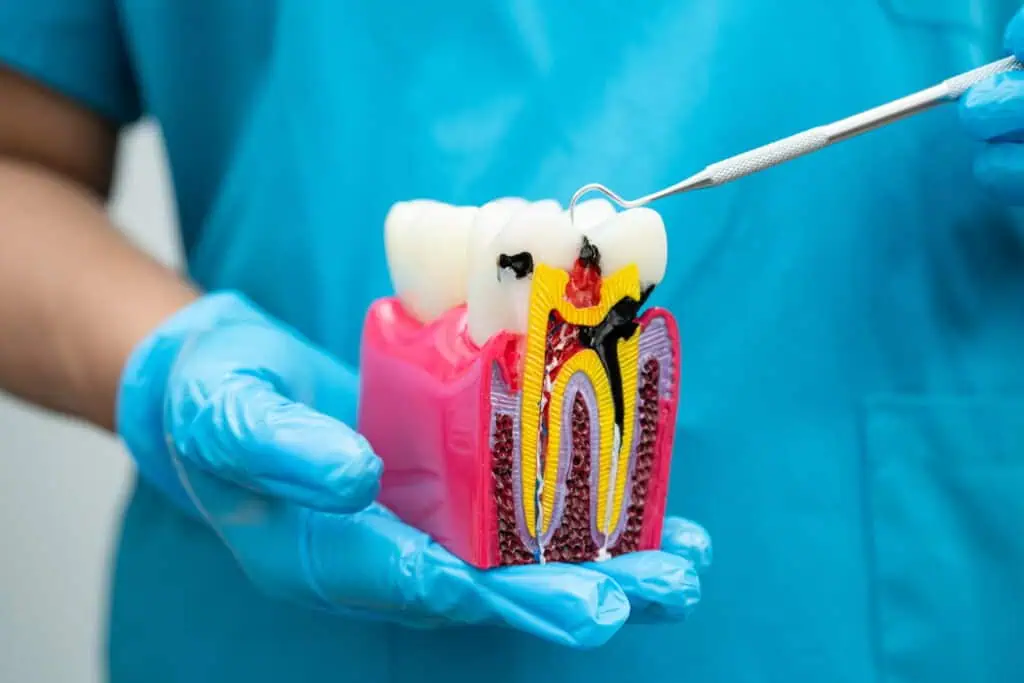
Severe decay removes the natural enamel that normally shields teeth from pressure and bacteria. Once a cavity expands across a large portion of the tooth, a simple filling cannot provide enough structural reinforcement. The Centers for Disease Control and Prevention reports that nearly 90 percent of adults in the United States have experienced tooth decay at some point, which explains why restorative treatments are so common. Large cavities require stronger protection.
- Cavities affecting more than half the tooth often require full coverage.
- Weakened enamel increases the chance of fractures.
- Crowns restore lost strength by covering the entire tooth.
2. A Crown Reinforces a Structurally Weak Tooth
Teeth endure tremendous pressure every day while chewing food, speaking, and clenching during sleep. A compromised tooth struggles to withstand this pressure, and fillings only replace a portion of missing material rather than reinforcing the entire structure. The National Institute of Dental and Craniofacial Research explains that enamel is the hardest substance in the human body, yet once damaged it cannot regenerate. Crowns provide support that weakened teeth cannot create on their own.
- Crowns surround the tooth like a protective cap.
- Encasing the tooth distributes chewing pressure evenly.
- Full coverage restoration reduces the likelihood of fractures.
3. Cracked or Broken Teeth Need Greater Stability
Cracks rarely remain small once they form, chewing pressure spreads them slowly across the tooth. A filling might seal part of the crack but cannot hold fractured enamel together under daily bite forces. Dental professionals often choose crowns because they stabilize the tooth and prevent deeper fractures that could reach the root. Stabilization protects the tooth.
- Deep cracks weaken the internal tooth structure.
- Crowns hold fractured surfaces together during chewing.
- Early reinforcement helps prevent tooth loss.
4. Root Canal Treatment Leaves Teeth Fragile
Root canal therapy removes infected pulp and saves a tooth that might otherwise be lost. The American Association of Endodontists explains that removing internal tissue also reduces the tooth’s moisture and flexibility, which leaves it more prone to breakage. Dentists frequently place crowns on these teeth because the crown restores strength and shields the treated tooth from damage. Protection becomes essential.
- Root canal therapy removes infected pulp tissue.
- Post-treatment teeth often become brittle.
- Crowns reinforce teeth that have undergone endodontic treatment.
5. Crowns Often Last Longer Than Fillings
Longevity plays a significant role when choosing between restorative treatments. Fillings perform well for moderate cavities, yet materials gradually wear down from chewing and temperature changes over time. Dental research published by the National Institutes of Health shows that many crowns remain functional for more than a decade with proper care. Long-lasting restoration matters.
- Crowns commonly last 10 to 20 years.
- Fillings may require replacement sooner due to wear.
- Durable materials such as zirconia resist heavy bite pressure.
6. Modern Crowns Blend Naturally with Teeth
Dental technology has changed dramatically over the past few decades. Digital imaging now allows dentists to design crowns that match surrounding teeth in color, shape, and translucency. Ceramic and porcelain materials mimic natural enamel closely, creating restorations that look natural even under bright light. Natural appearance remains important.
- Digital impressions improve crown accuracy.
- Shade matching helps crowns blend with surrounding teeth.
- Porcelain materials closely resemble natural enamel.

7. Crowns Protect Teeth from Future Damage
Preventive thinking often guides restorative dental decisions. A crown not only repairs existing damage but also shields the tooth from further deterioration caused by pressure, bacteria, or fractures. The National Institute of Dental and Craniofacial Research emphasizes that preserving natural teeth whenever possible remains a primary goal of dental care. Protective restorations help achieve that goal.
- Crowns protect weakened teeth from additional decay.
- Encasing the tooth limits structural breakdown.
- Long-term protection helps avoid extraction.
Understanding Why Dentists Often Recommend Crowns Instead of Fillings
Dental restoration decisions rarely involve a single factor; dentists examine the entire condition of the tooth, including decay depth, structural strength, chewing pressure, and long-term durability. Teeth affected by significant decay, fractures, or root canal treatment often require more than a filling because a filling replaces lost material while a crown rebuilds the entire outer structure. Patients who receive crowns often experience stronger chewing ability and fewer complications over time. Protective restoration preserves natural teeth and allows them to continue functioning comfortably for years.
Dentists Suggest a Crown Instead of a Filling: Key Takeaways
- Large cavities weaken teeth beyond what fillings can support.
- Crowns strengthen fragile teeth by covering the entire surface.
- Cracked teeth benefit from stabilization provided by crowns.
- Root canal treated teeth often require crowns for durability.
- Crowns generally last longer than traditional fillings.
- Modern materials create natural-looking restorations.
- Crowns protect teeth from future structural damage.
Frequently Asked Questions
Why would a dentist recommend a crown instead of a filling?
A crown becomes necessary when a tooth loses significant structural strength. Fillings repair small cavities, while crowns restore the entire outer structure and protect weakened teeth.
How long do dental crowns typically last?
Many crowns remain functional for 10 to 20 years when patients maintain consistent oral hygiene and attend regular dental checkups.
Do crowns look natural compared with fillings?
Modern crowns made from porcelain or ceramic closely resemble natural enamel. Dentists match color and shape carefully so the restoration blends with surrounding teeth.
Are crowns always required after a root canal?
Most back teeth receiving root canal treatment benefit from crowns because the procedure removes internal tooth structure and reduces strength.
Can a tooth with a crown still develop decay?
Yes, decay can still form around the edges of a crown if oral hygiene declines. Regular brushing, flossing, and dental visits remain essential for long-term oral health.