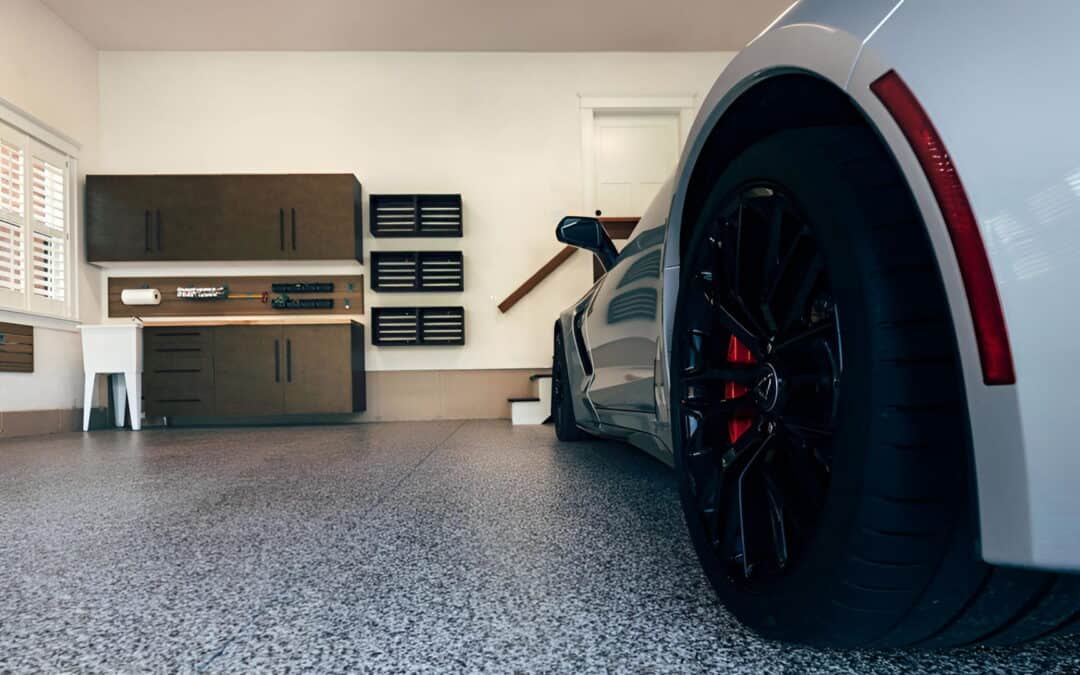
Garage floors take a steady beating from parked vehicles, hot tires, rolling equipment, oil drips, lawn tools, storage racks, road grit, and everyday foot traffic. The benefits of epoxy flooring for garage floors include greater surface protection, simpler cleaning, broader design choices, and a finished layer that shields concrete from much of the wear found in a working garage. Homeowners also need to consider installation cost, moisture, existing slab damage, surface preparation, and expected lifespan because those factors can change how well the coating performs over time. “Homeowners often look at color first, but the condition of the concrete underneath usually has a much greater effect on how the finished floor performs,” a representative of Optima Concrete Coatings said.
- Garage activity should influence the coating system selected.
- Concrete condition can affect bonding and long-term durability.
- Surface preparation often matters more than decorative appearance.
- Moisture and existing damage should be identified before coating begins.
1. Epoxy Garage Floor Benefits
Epoxy garage flooring forms a dense cured layer over properly prepared concrete, creating a working surface that absorbs much of the contact normally directed at the slab. A typical older garage may show worn tire paths, embedded stains, scattered chips, and fine concrete dust even when the floor remains structurally usable, and coating that slab can help slow additional surface deterioration. Professional installers often grind or otherwise mechanically prepare concrete so the coating can bond with a clean, open surface rather than sitting over dirt, weak concrete, or an old finish. Careful preparation becomes especially valuable for homeowners who expect years of vehicle parking, storage, hobbies, or workshop use.
- Cured epoxy creates a harder layer over prepared concrete.
- Mechanical preparation removes weak surface material and contaminants.
- Existing cracks may need repair before the coating is installed.
- Vehicle traffic and workshop use should influence system selection.
2. Stronger Surface Protection
Concrete feels solid underfoot, yet its upper surface can gradually wear from tires, rolling tool cabinets, lawn equipment, dropped objects, and abrasive sand carried into the garage. Epoxy flooring places a continuous barrier over that surface, so much of the routine friction and minor abrasion reaches the coating before reaching the exposed concrete below. Technical information for professional epoxy floor coatings shows that resinous systems can develop strong adhesion to properly prepared concrete and are used in areas subject to repeated traffic and wear. Large cracks, moving joints, severe spalling, or structural slab problems still require separate attention because epoxy is a surface coating rather than a structural repair material.
- Epoxy reduces direct contact between garage activity and bare concrete.
- Rolling storage equipment can create less direct abrasion on the slab.
- Damaged concrete may require patching or repair before installation.
- A coating cannot correct structural movement beneath the floor.
3. Easier Garage Cleaning
Bare concrete contains pores and small surface irregularities that catch road dust, mud, grease, grass clippings, salt, and automotive fluids, making some garage floors surprisingly difficult to clean well. Epoxy creates a smoother, less absorbent finish that can usually be swept, vacuumed, or damp-mopped with less effort, and spills become easier to locate before they spread into surrounding areas. Garage floor maintenance guidance from Angi recommends removing accumulated debris because sand and grit can scratch coated surfaces when they are repeatedly ground beneath shoes or tires. Homeowners can help preserve the finish by cleaning loose debris regularly and dealing with spills soon after they occur rather than allowing residue to build up.
- Smoother floors can make sweeping faster.
- Spills stand out more clearly on a finished surface.
- Removing grit can reduce unnecessary scratching.
- Routine cleaning can help maintain gloss and texture.
4. Cleaner Garage Appearance
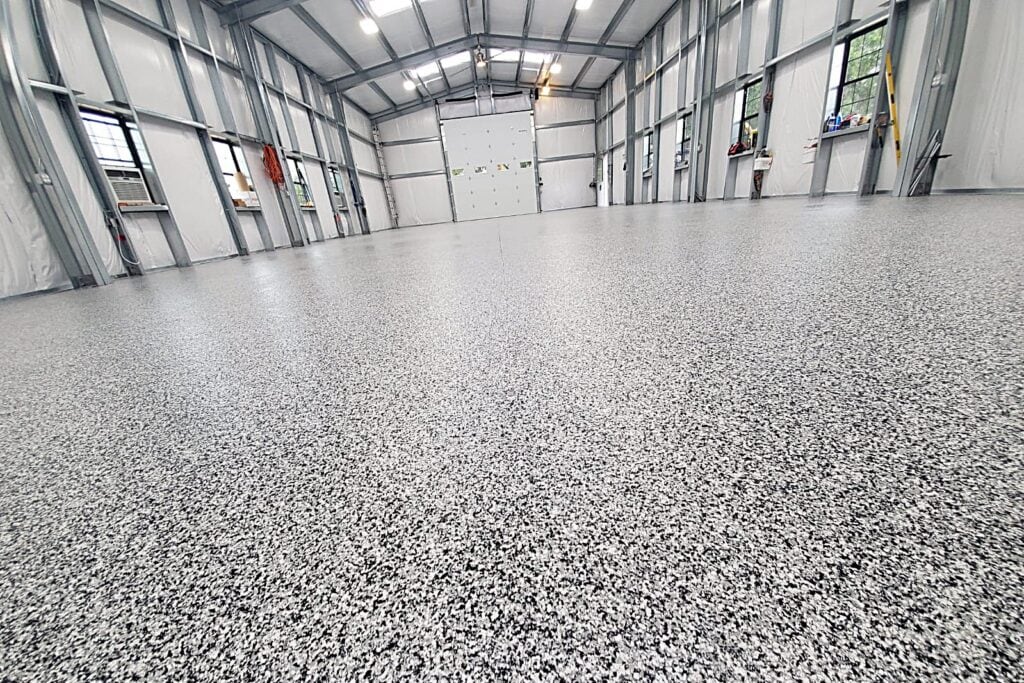
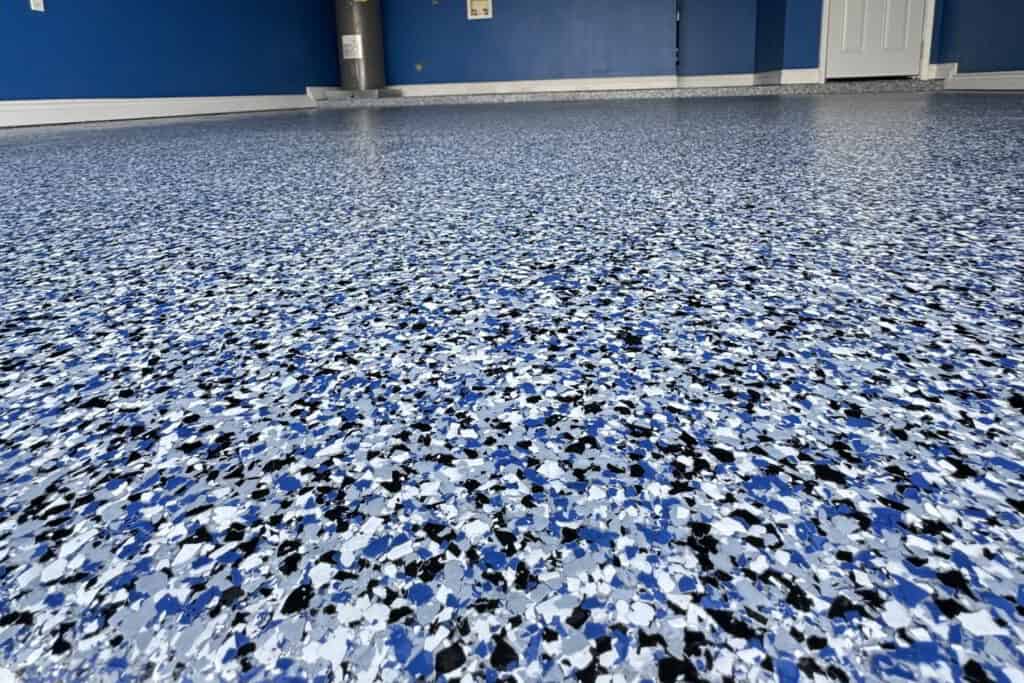
Garage concrete no longer has to remain dull gray simply because the space is used for vehicles and storage. Decorative flakes, solid colors, metallic effects, quartz systems, varied gloss levels, and textured finishes allow homeowners to coordinate flooring with cabinetry, shelving, wall colors, or workshop equipment while still keeping the surface practical. Optima Concrete Coatings lists flake, quartz, metallic, and other decorative systems among the available approaches for concrete surfaces. Patterned finishes can also disguise minor dust, tiny scuffs, and everyday marks more effectively than some smooth, single-color surfaces.
- Decorative flakes create visual variation across the floor.
- Solid colors provide a simpler finished appearance.
- Metallic systems can create flowing, less uniform patterns.
- Texture and color affect how easily dust and marks are noticed.
5. Better Stain Resistance
Motor oil, grease, muddy water, fertilizers, lawn chemicals, and other garage substances can penetrate untreated concrete because the material naturally absorbs liquids through its pores. A properly cured epoxy system creates a less porous barrier, giving homeowners more time to wipe away many common spills before they soak deeply into the slab and leave stubborn discoloration. Technical testing for professional epoxy flooring systems documents resistance to numerous chemicals, though actual resistance changes according to coating formulation, chemical concentration, temperature, and how long the substance remains on the surface. Quick cleanup is still the wiser habit because gasoline, solvents, acids, and other aggressive materials may affect certain coatings when exposure is prolonged.
- Oil is less likely to soak immediately into coated concrete.
- Chemical resistance differs among epoxy formulations.
- Exposure time can influence staining or surface damage.
- Prompt cleanup helps protect color and finish quality.
6. Garage Floor Suitability
Epoxy flooring is suitable for many garage floors, but not every concrete slab is ready to be coated the moment installation begins. Contractors may need to evaluate moisture movement, cracks, oil contamination, spalling, weak concrete, old paint, sealers, or previous coatings because each condition can interfere with proper adhesion if it is ignored. Concrete moisture guidance from Sika explains that substrate evaluation and moisture testing can play an important role before resinous flooring systems are applied. Homeowners benefit from treating the garage slab as its own project, since two floors of the same size can require very different preparation based on age, moisture exposure, repairs, and past treatments.
- Moisture can influence product and primer selection.
- Cracks may need filling or repair before coating.
- Oil contamination can interfere with adhesion.
- Existing paint or sealers may require mechanical removal.
- Weak or deteriorated concrete may need additional preparation.
7. Epoxy Flooring Cost
Epoxy flooring cost varies because square footage tells only part of the story, and two garages of equal size may have very different labor and material requirements. Current 2026 estimates from Angi’s epoxy flooring cost guide place professional installation at roughly $2 to $12 per square foot, including labor and materials, while resin type, slab condition, repairs, preparation, and decorative choices can move the price in either direction. A garage that needs extensive grinding, crack filling, old coating removal, moisture treatment, multiple coating layers, or a decorative flake system will generally require more work than clean concrete with minimal damage. Homeowners comparing estimates can get a clearer picture by checking what surface preparation, repairs, coating layers, finish materials, and warranty terms are included rather than focusing only on the lowest initial number.
- Professional installation may run about $2 to $12 per square foot.
- Concrete repairs can increase labor and material costs.
- Removing an older coating can add preparation time.
- Decorative flakes and specialty finishes may increase project cost.
- Detailed estimates help homeowners compare similar coating systems.
8. Epoxy Floor Lifespan
Epoxy floor lifespan varies according to coating quality, concrete preparation, vehicle traffic, moisture, sunlight, cleaning practices, and how heavily the garage is used. Angi reports that epoxy flooring can last roughly 10 to 20 years depending on material and frequency of use, though thin coatings, severe abuse, or poor preparation may shorten that period considerably. A garage used mainly for parking a family vehicle creates very different wear than a workshop where heavy tools are dropped, steel carts are rolled daily, and automotive repair work exposes the floor to frequent chemicals. Peeling edges, widespread scratching, exposed concrete, bubbling, loss of adhesion, or substantial fading can signal that the surface needs closer inspection, repair, or recoating.
- Some properly installed epoxy floors can last 10 to 20 years.
- Heavy workshop traffic can shorten service life.
- Moisture problems may cause premature adhesion failure.
- Regular removal of grit can limit unnecessary abrasion.
- Visible peeling or bubbling deserves early attention.
9. Less Concrete Dust
Exposed concrete can release fine surface dust as it wears, while mechanical grinding during preparation can create much larger amounts of airborne dust if proper controls are not used. NIOSH research on concrete grinding found that local exhaust systems attached to grinders reduced worker dust exposure by at least 90% during the grinding operations studied, showing why professional dust collection matters during preparation. A cured coating covers the exposed concrete after that work is complete, reducing direct wear against the slab during routine garage use and making loose surface dust less of an everyday issue. Homeowners who use their garages for storage, woodworking, hobbies, exercise equipment, or vehicle maintenance may find the cleaner surface particularly useful because dust is less likely to settle repeatedly on nearby belongings.
- Concrete grinding can generate substantial airborne dust.
- Dust-extraction equipment helps control exposure during preparation.
- A cured coating covers the exposed concrete surface.
- Less loose concrete dust can make storage areas easier to maintain.
10. Long Term Garage Value
Garage flooring becomes more useful when several advantages work together, including surface protection, simpler maintenance, stain resistance, visual improvement, and a potentially lengthy service life. Homeowners who frequently park vehicles, repair equipment, store tools, work on hobbies, or use the garage as an extension of the home may notice those advantages much more than someone who rarely uses the space. Safety also matters during installation because the CDC and NIOSH explain that uncured epoxy components can present exposure hazards, while cured epoxy and resin products are generally safer to handle. Proper ventilation, protective equipment, product mixing, curing time, surface preparation, and ongoing cleaning all play a role in how well a completed floor performs years after installation.
- Frequent garage use can make a durable coating more practical.
- Uncured epoxy requires appropriate handling precautions.
- Manufacturer curing times should be followed before vehicle traffic begins.
- Maintenance can help preserve both appearance and surface performance.
Choosing Garage Epoxy
Epoxy flooring for garage floors works best when homeowners evaluate the visible coating and the concrete underneath as parts of the same flooring system. Cost can vary considerably, lifespan may extend for many years, and durability depends heavily on preparation, moisture conditions, resin chemistry, vehicle traffic, sunlight, temperature, and maintenance, which means the least expensive installation is not always the least costly choice over the life of the floor. Homeowners should also remember that color and flakes are only the visible portion of the project because grinding, cleaning, crack repair, moisture evaluation, primer selection, coating thickness, texture, and curing can determine whether the finished surface remains securely bonded. Comparing slab condition, garage activity, expected maintenance, installation details, and projected lifespan gives homeowners a much more useful way to decide whether epoxy fits their needs.
- Evaluate concrete preparation and coating quality together.
- Compare initial price with expected service life.
- Match the coating system to normal garage activity.
- Account for moisture and existing slab damage before installation.
- Review what preparation is included when comparing estimates.
Epoxy Garage Floor Takeaways
- Epoxy can shield garage concrete from routine abrasion, stains, vehicle traffic, and everyday wear.
- Professional epoxy flooring commonly costs about $2 to $12 per square foot based on current national estimates.
- Some professionally installed epoxy floors may last roughly 10 to 20 years when conditions and maintenance are favorable.
- Concrete moisture, cracks, contamination, weak areas, and previous coatings should be evaluated before installation.
- Mechanical surface preparation can have a major effect on coating adhesion and lifespan.
- Decorative flakes, colors, textures, quartz, and metallic finishes give homeowners several appearance choices.
FAQs
Is Epoxy Suitable for Garage Floors?
Epoxy is suitable for many structurally sound concrete garage floors when moisture, contamination, cracks, and existing coatings are addressed before installation. Some slabs may need crack repair, moisture treatment, deeper grinding, patching, or removal of an older finish before the coating can bond correctly. A thorough evaluation helps determine whether the floor is a good candidate and what preparation will be required for the garage’s normal use.
How Long Does Garage Epoxy Last?
A professionally installed epoxy floor may last roughly 10 to 20 years, although no single lifespan applies to every garage. Vehicle traffic, direct sunlight, moisture, abrasive debris, preparation quality, coating thickness, dropped equipment, and cleaning habits can all change how quickly the surface wears. Strong substrate preparation and regular maintenance can improve the chances of the coating reaching the longer end of its expected lifespan.
How Much Does Garage Epoxy Cost?
Professional epoxy flooring commonly costs about $2 to $12 per square foot according to current national estimates. Garage size, grinding requirements, concrete repairs, old coating removal, moisture conditions, decorative flakes, resin type, coating layers, and labor can move the total above or below that range. Homeowners comparing prices should review exactly what preparation, repairs, materials, and finishing steps are included so similar systems are being compared.
Why Does Epoxy Flooring Peel?
Epoxy can peel when the coating loses its bond with the concrete underneath. Moisture vapor, oil contamination, weak concrete, inadequate grinding, dust left on the surface, incompatible previous coatings, or application problems can contribute to adhesion failure. Correcting the underlying cause is important because coating over a failed area without fixing the problem can allow peeling or bubbling to appear again.
Can Epoxy Garage Floors Handle Cars?
Garage epoxy systems are commonly used on concrete floors that receive normal residential vehicle traffic. Coating chemistry, surface preparation, curing time, tire temperature, abrasive debris, and ongoing maintenance all affect how successfully a particular floor handles repeated parking and movement. Homeowners should follow the coating manufacturer’s full curing recommendations before driving onto a newly installed surface because a floor may feel dry well before it has reached its intended hardness.